Science Café’s Autumn Edition Focused on the Causes and Consequences of the „Summer of Truth“
The discussion examined drought, heatwaves and wildfires in the context of European climate resilience and agriculture.
European Commission President Ursula von der Leyen described the past summer as a “summer of truth”. From parched soils and scorching days with temperatures exceeding 40°C to devastating wildfires, Europe experienced the impacts of a changing climate firsthand in 2026. The final Science Café event of the year therefore brought perspectives from Czech science and research into the ongoing debate on European policies for climate resilience.
CZELO organised the discussion in cooperation with the Representation of the City of Prague to the EU and the Representation of the South Moravian Region in Brussels. The invited speakers included Pavel Zahradníček, researcher, climatologist and meteorologist at the Global Change Research Institute of the Czech Academy of Sciences (CzechGlobe); Vera Potopová, agroclimatologist and Full Professor at the Czech University of Life Sciences Prague (CZU); and Jan Dusík, Deputy Director-General at the European Commission (DG CLIMA). Ana Nava, Project and Policy Officer at the European Regions Research and Innovation Network (ERRIN), moderated the discussion.
The panelists presented current climate trends and future projections, focusing in particular on agriculture and landscape drought. They stressed that climate change is unlikely to create entirely new weather extremes across Europe; rather, it will intensify those already occurring, especially droughts, wildfires and heatwaves.
"This summer was worse than I expected," said climatologist Pavel Zahradníček, adding that days with temperatures above 40°C are likely to become the norm in the coming years. He also discussed the Intersucho project, developed by CzechGlobe and Mendel University in Brno in cooperation with the Czech Hydrometeorological Institute (CHMI) to monitor meteorological and agricultural drought. In 2025, CzechGlobe also launched the Vlny veder (Heatwaves) project, which, according to Zahradníček, aims to improve public understanding of the effects of extreme heat on human health and society as a whole.
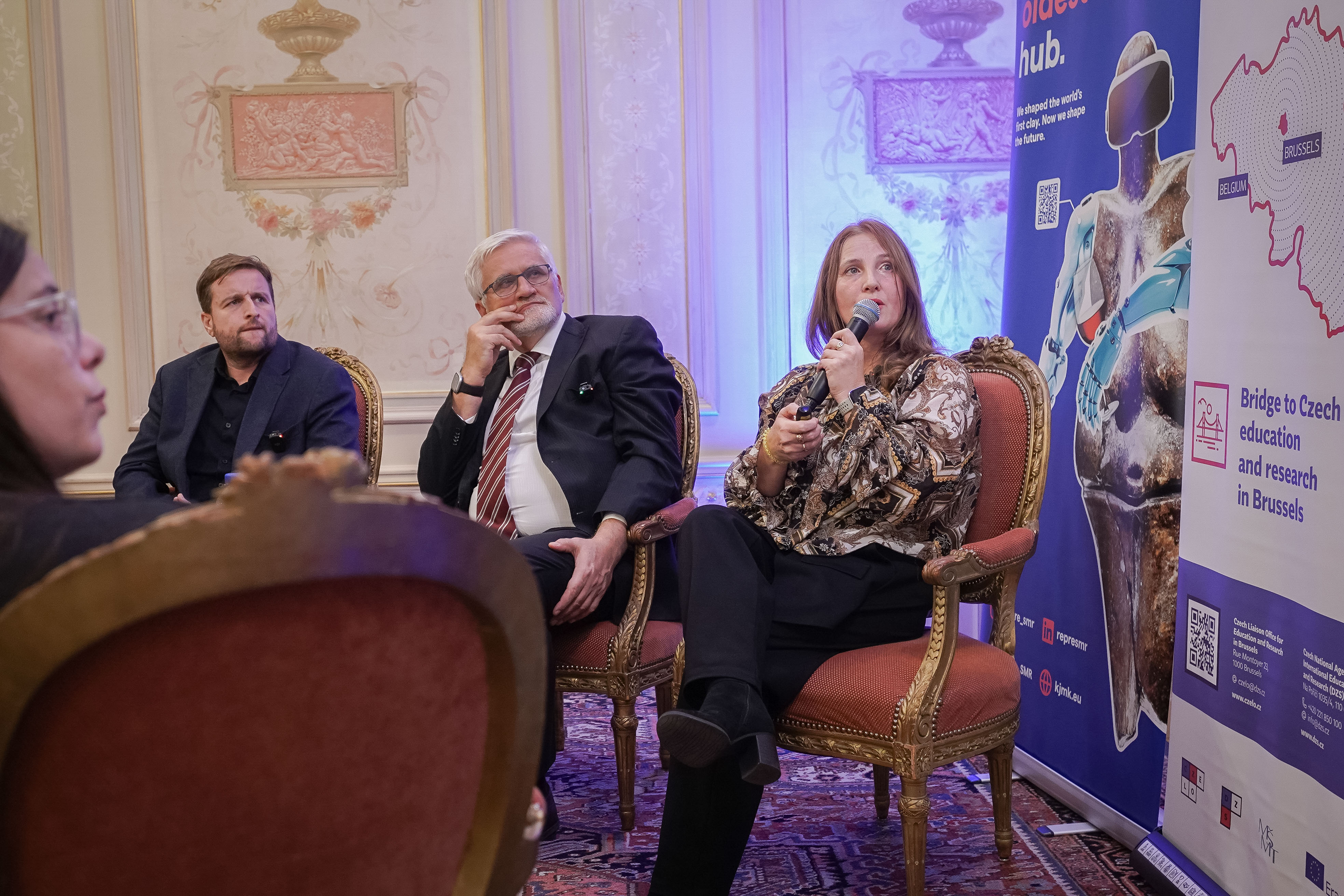
Professor Vera Potopová explained to the audience how these extreme weather events affect European agriculture, with particular emphasis on the Czech Republic. She noted that the full consequences of this year’s summer will only become apparent next year. At the same time, she highlighted several potential opportunities, including the possibility that some Czech regions could become more agriculturally productive and better suited to cultivating a wider variety of crops, including more subtropical species.
She also presented the Agropočasí (Agroweather) portal, launched by CZU in cooperation with CHMI. The platform provides farmers and other users with up-to-date information on air and soil temperatures, humidity, sunshine duration, precipitation and other meteorological parameters.
Jan Dusík then outlined the European Commission’s plans and instruments under the EU Framework for Climate Resilience. He explained that the Framework aims to help Member States prepare more effectively for the impacts of climate change, including through a range of digital tools. These include catalogues of adaptation measures and the European Climate Viewer, which provides public and private stakeholders with accessible, map-based information on specific climate risks and projected time horizons, without requiring prior expertise in climatology.
Dusík emphasised that the Commission has designed these measures to respond to local needs at a time when extreme natural events are becoming more frequent and their economic costs continue to rise.