What's new in Erasmus Mundus and European University Alliances? The Technical University of Liberec has become part of the RUN-EU alliance.
On 18 November, we organised 2 pre-conferences as part of CEEEDUCON: a meeting on Erasmus Mundus and European University Alliances
Erasmus Mundus: a key action of the new Erasmus+ to attract global talent
During the morning, we held meeting of the Czech Erasmus Mundus community, i.e., representatives of Erasmus Mundus programmes in which Czech HEIs are involved. Participants learned not only about the latest developments in joint study programs at the EU level and their accreditation, but also gained inspiration from the example of good practice of the Global Development (GLODEP) Erasmus Mundus programme, which was presented by Palacký University in Olomouc.
In its presentation on EU-level developments, CZELO underlined that the European Commission had recently published a new call for grant applications under both Erasmus Mundus actions (Erasmus Mundus Joint Masters and Design Measures). The deadline for applications is 12 February 2026. Participants also learned about the November conference on the sustainability of Erasmus Mundus Joint Master's programmes, which took place in Brussels. The conference featured a report highlighting that "the financial sustainability of Erasmus Mundus programs is a crucial issue in the current political context. It is particularly relevant in the context of the ongoing negotiations on the new EU Multiannual Financial Framework (2028-34), in which the European Commission is seeking to ensure the efficient use of resources. The European Commission is therefore calling on current Erasmus Mundus programmes to map, share, and implement best practices that will ensure their continuity beyond the period of Erasmus Mundus grant funding, enabling the European Commission to redirect funding to new joint study programs and initiatives." According to the European Commission's proposal, Erasmus Mundus should remain part of Erasmus+ in 2028-34, but there is discussion about a possible change in the structure of grants and the separation of student scholarships from institutional support. In the new period, Erasmus Mundus is to be a key tool for attracting global talent to Europe, which should contribute to European competitiveness. The European Commission's proposal still needs to be approved by the Council of the EU and the European Parliament.
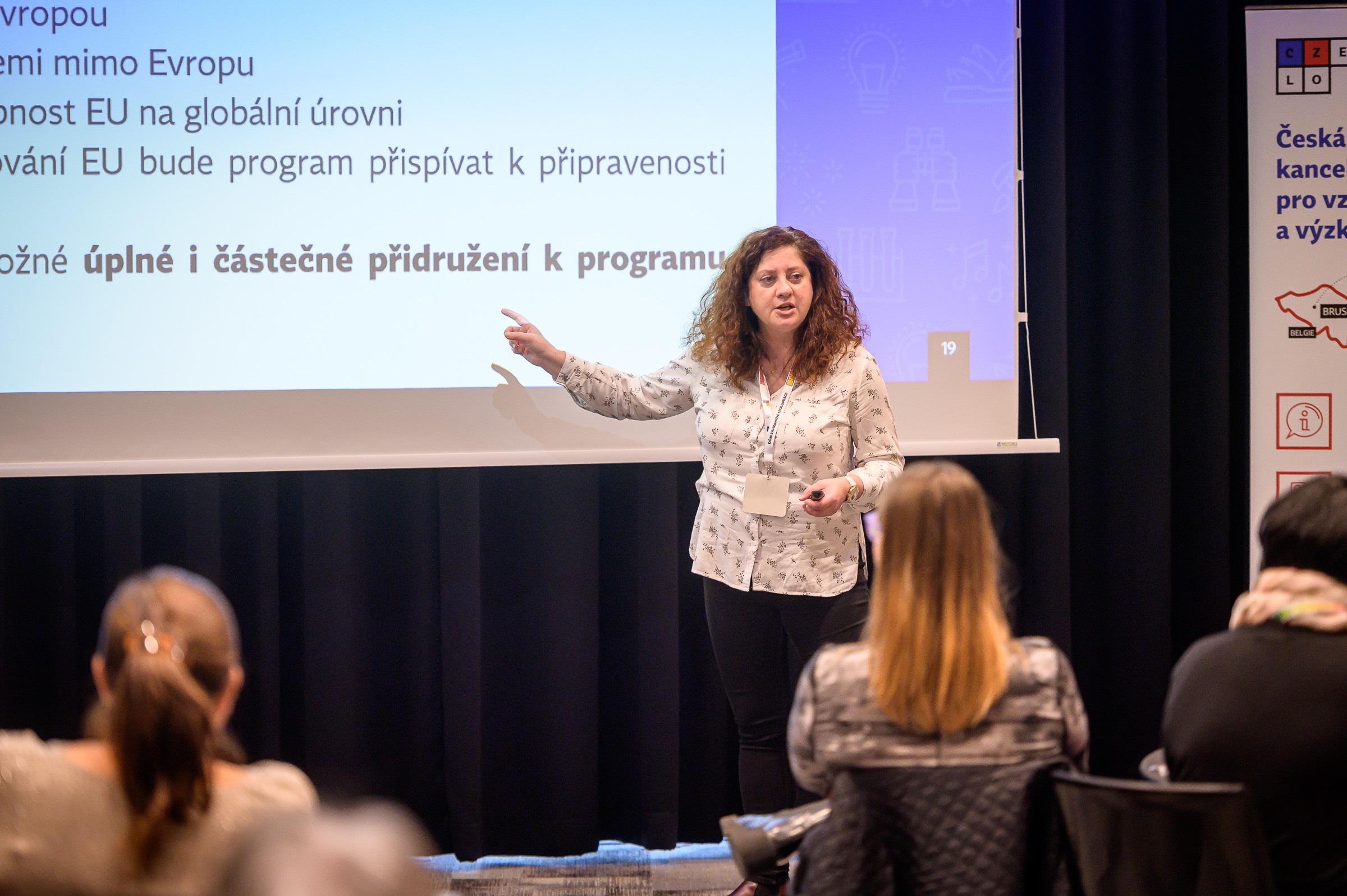
The presentation also focused on the European Degree Label. The European Degree Policy Lab (a working group composed of representatives of Member States, the European Commission, and relevant stakeholders) is currently being launched to prepare the European Degree Label so that HEIs can begin piloting it in mid-2026. At the end of November, the first European Degree Forum was held in Florence, providing a space for discussion on the development of the label (a recording of the forum is available online). During December, the European Commission will publish two calls to support the piloting of the European Degree Label: the European Degree Exploratory Action call for higher education institutions that would like to design and implement joint study programs according to the criteria of the European Degree Label will have a budget of €14 million. The European Degree Pathway Projects call under Erasmus+ Forward-looking Projects, which aims to promote cooperation between national authorities (ministries, accreditation agencies) and higher education institutions, students, economic and social partners in implementing the label and mapping the possibilities of the European degree, with a budget of €7 million, was published yesterday by the European Commission.
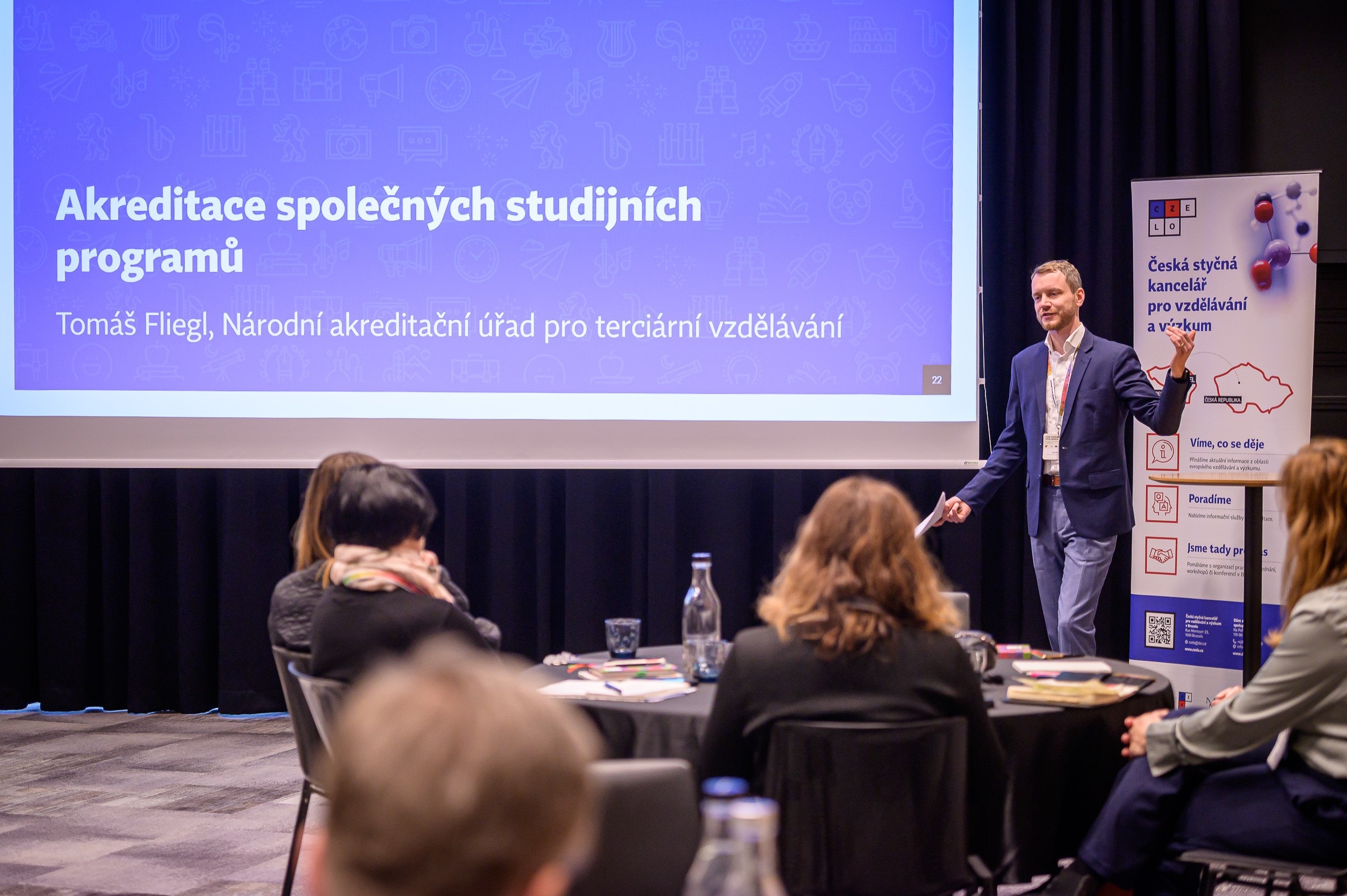
The programme continued with a presentation by Tomáš Fliegl from the National Accreditation Bureau (NAÚ) for Tertiary Education, who presented participants with an outlook for the future regarding the accreditation of joint study programs at the national level, also in the context of this year's changes concerning the NAÚ. He stated that Czechia does not currently allow the so-called European approach, and therefore Czech higher education institutions must accredit joint study programs at the national level (within the framework of institutional accreditation or programme accreditation at the NAÚ). The European approach is not enshrined in legislation, and therefore the evaluation of a foreign agency that is part of the EQAR register is not currently recognised. The NAÚ plans to apply to the EQAR in 2027 so that it can evaluate joint study programmes according to the standards of the European approach.
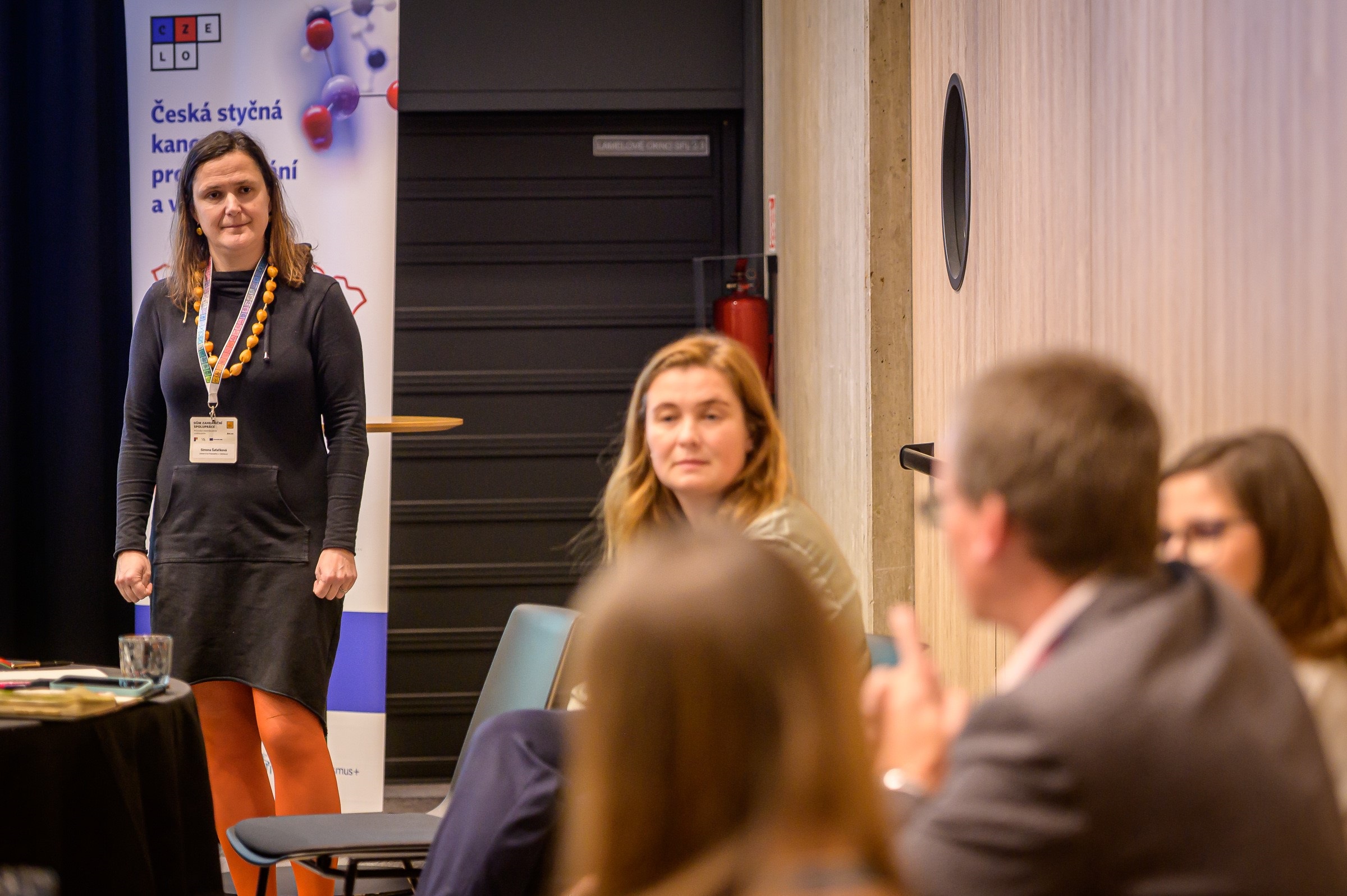
Simona Šafaříková, director of the Erasmus Mundus GLODEP program, then presented the consortium's good practices in the area of awarding joint degrees and hybrid graduation ceremonies. She noted that the process of issuing joint degrees is lengthy, but graduates immediately receive confirmation of completion of their studies and a diploma supplement, which allows them to continue their doctoral studies or enter employment without any problems. At the end of the meeting, participants had the opportunity to discuss in smaller groups the issues they are currently addressing in their Erasmus Mundus programmes and share their experiences with others.
European University Alliances: TUL became the 13th Czech university involved in financially supported alliances, a new call and outlook for the future
The morning meeting of the Erasmus Mundus community was followed by an afternoon round table discussion with representatives of Czech higher education institutions involved in European University Alliances, including those with the Seal of Excellence. This was the fourth round table discussion we have organised on this topic, and, as usual, a representative from the Ministry of Education, Youth and Sports also participated. A new development is that the Technical University of Liberec has become a member of the supported RUN-EU alliance, bringing the number of Czech universities in alliances to 13, representing half of all public universities.

The round table was divided into two parts: in the first part, participants learned about current developments at the EU level, including the publication of a new call for two-year funding for alliances. This call is primarily intended for those supported in the 2022 call, but it is also open to other long-term cooperating consortia, including holders of the Seal of Excellence. The deadline for submitting applications is 4 March 2026. More information is available on the FTOP portal.
The roundtable participants also learned about the main outcomes of the October conference held as part of the LTA Spread EUI, which focused on sharing the results of alliances with universities not involved in alliances. Participants were also introduced to the study "European Universities As Role Models," which mapped the needs of non-participating universities from 20 Erasmus+ program countries. The study shows that 76% of unsuccessful applicants for European University Alliance grants plan to continue their intended cooperation through smaller cooperation projects. The main source of inspiration for non-participating universities is the development of joint study programs, certificates, and joint diploma supplements, pedagogical innovations (courses, models, tools), and collaborative activities (joint campus, network, ecosystem). The roundtable discussion also touched on the European legal status of alliances, which was tested by pilot projects (2023-24). Two scenarios were proposed: adapting existing instruments (EGTC and EEIG) or creating a new legal framework for academic cooperation. In its strategic document Union of Skills, the European Commission confirmed that it will submit a proposal for the legal status of alliances in 2027. The topic is crucial and timely, as most alliances with Czech participation already have legal status under the national law of one of the partners or are preparing to establish it.
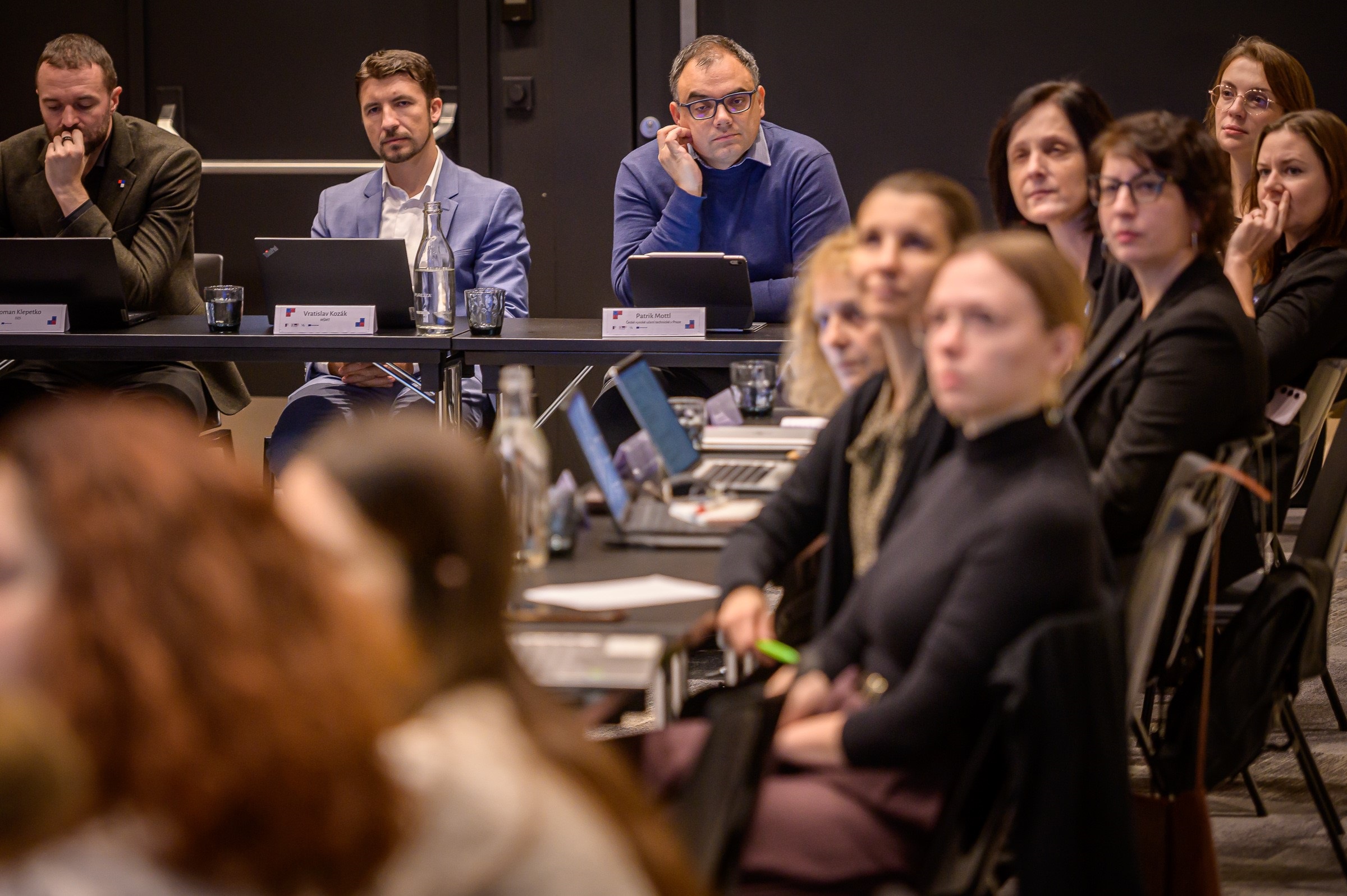
In the last part of the round table, participants learned about the development of the European Degree Label and the European Commission's proposal for the EU budget for 2028-34, including the proposed form of the Erasmus+ program. European University Alliances are to remain a key part of Erasmus+, closely linked to the Union of Skills and attracting talent from around the world. At the same time, discussions are underway in Brussels on greater financial synergies (e.g., joint Erasmus+ and Horizon calls), including within the Competitiveness Fund, and a longer funding period (e.g., for the entire duration of the multiannual financial framework, i.e., seven years). Then followed a discussion on the global dimension of alliances, joint study programs, and short-term mobility. The next round table will take place as part of CEEDUCON 2026.