
This year's first EduCafé focused on STEM education and its attractiveness
On April 14, we organized the first EduCafé of 2026 in collaboration with SwissCore and Representation of the South Moravian Region to the EU.
The discussion featured Lena Dändliker, head of the Swiss Education Lab at the Department of Educational Systems at ETH Zurich, whose research focuses on educational processes and their impact on individuals and society. We also welcomed Mariana Tesařová, Head of the Internationalization Department at Brno University of Technology (BUT), where she works to strengthen the international dimension of education and research in the STEM field. The third speaker was Chiara Colella from the European Commission’s Directorate-General for Education, Youth, Sport and Culture (DG EAC), who is involved in the development of STEM within the European Education Area. The discussion was moderated by David Chvála from the CZELO office.
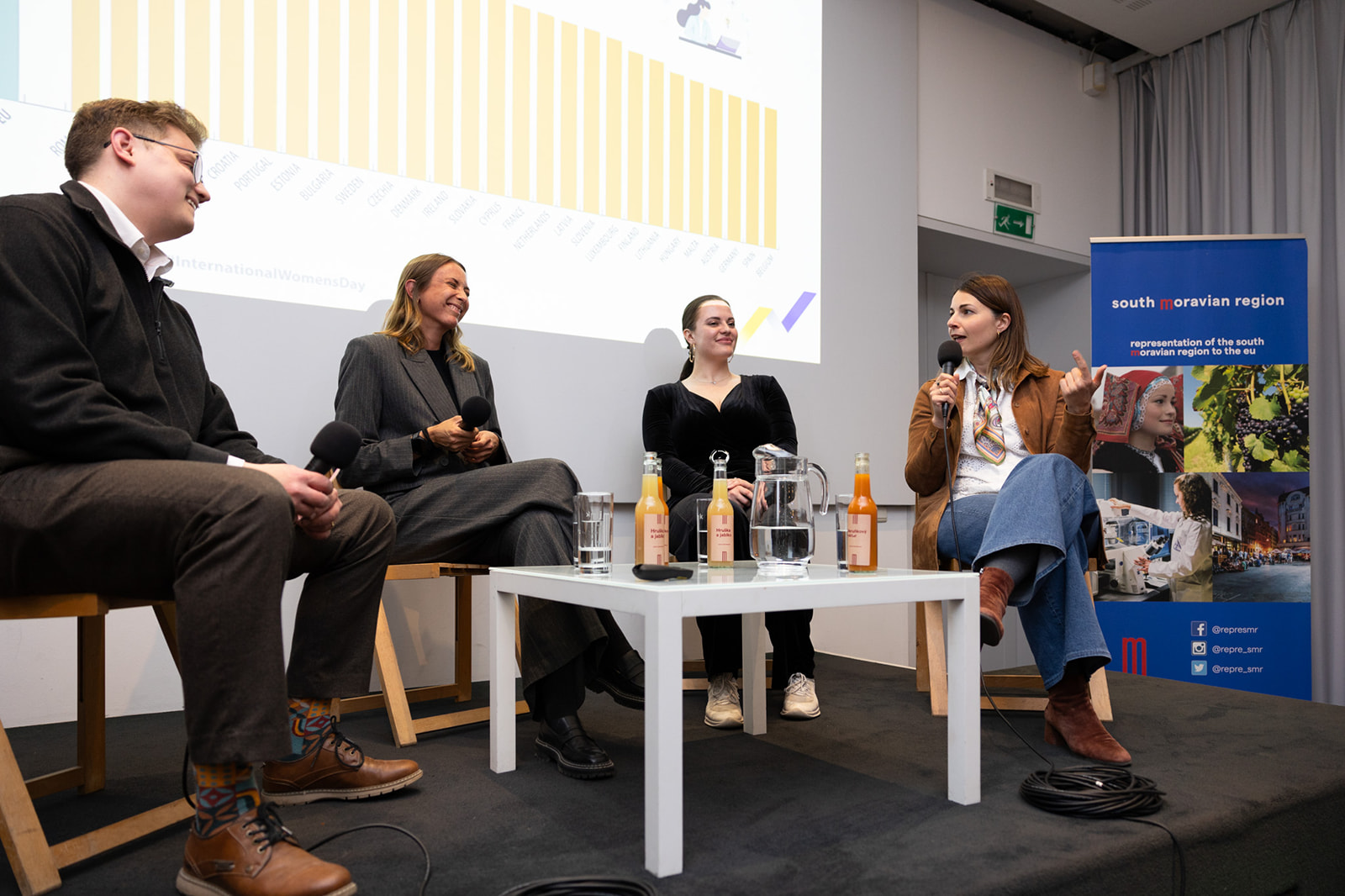
Chiara Colella began by noting that the 1st anniversary of the STEM Education Strategic Plan, as part of the broader Union of Skills agenda, offers a great opportunity to take stock of the achievements made so far, and build further on them. Key priorities include strengthening the position of STEM in education and training policies, while lower interest, gender gaps and insufficient talent development remain persistent challenges. As next steps, Chiara Colella mentioned the launch of pilot projects by the end of the year, such as the creation of STEM education centers, connecting schools with museums, laboratories, and other relevant stakeholders to make STEM education more attractive to students.
According to Mariana Tesařová, Czechia lacks a national strategy for vocational education, to which BUT is responding by increasing its cooperation with the regions. She also pointed out that interest in STEM must be systematically fostered as early as elementary school, particularly through hands-on projects and activities. One such project is MyMachine, in which children can become inventors and, together with university students, create functional prototypes of their inventions, the first project of its kind in the Czech Republic. In this context, Mariana Tesařová also mentioned the potential for developing similar initiatives in the Czech environment, for example through MyMachine Expo.
According to Lena Dändliker, it is crucial to focus on the early stages of education, particularly on elementary school students, and to provide them with support and positive role models, as decisions regarding academic and professional paths are significantly influenced by societal factors. She also highlighted the importance of initiatives such as Girls Go STEM, which aim to strengthen girls’ interest in technical fields from an early age. In her view, it is essential to work with the broader social environment, including families, because gender stereotypes persist in society and influence the choices young people make.
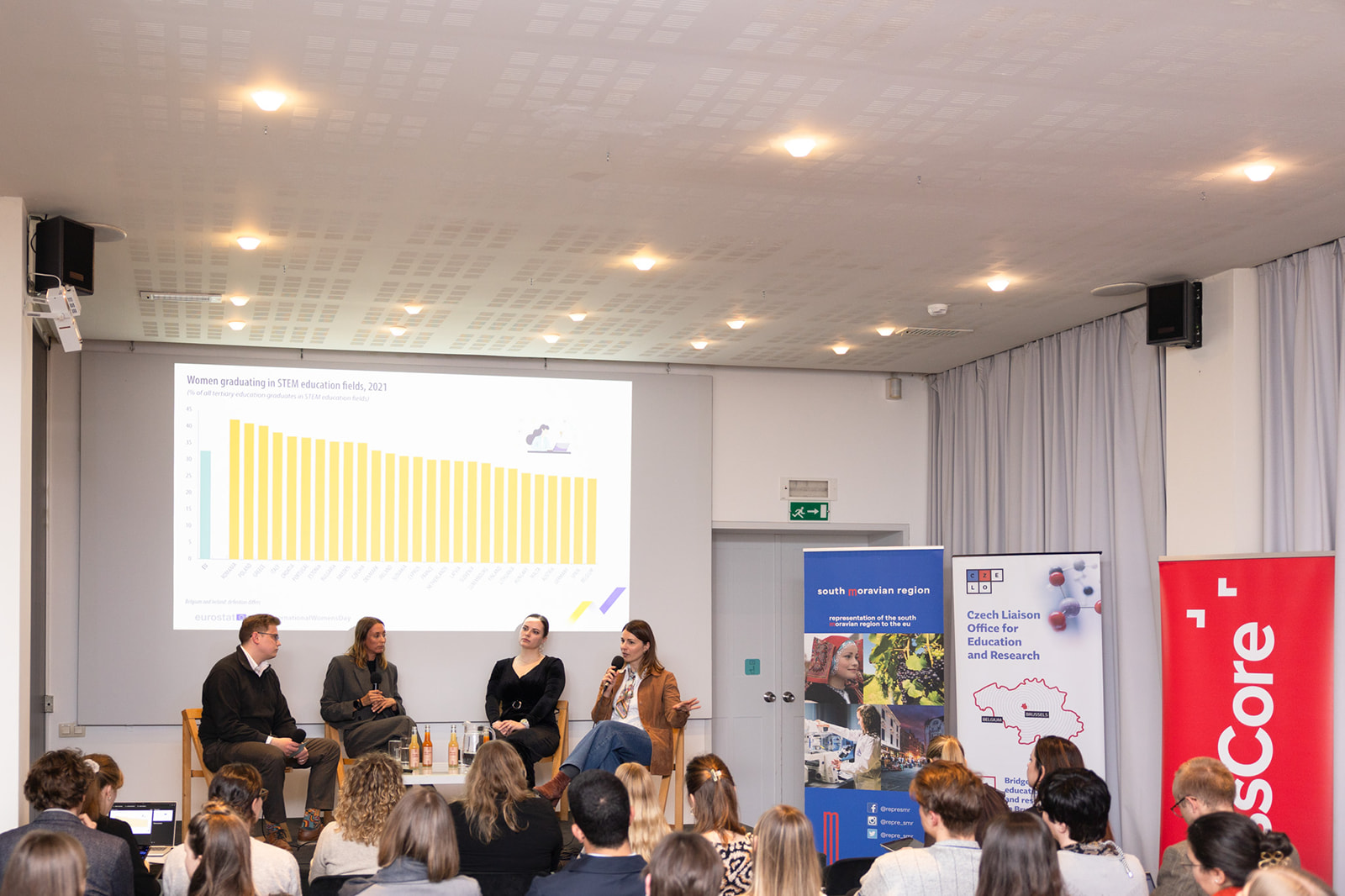
The discussion then focused on specific support tools and systemic challenges associated with implementing these measures. According to Chiara Colella, it is necessary to establish stable political and financial frameworks at the national level that will enable the long-term development and retention of talent, including support for innovative regions and institutions. It is also important to better identify and develop talent throughout the entire educational cycle in line with labor market needs. The speakers also highlighted the need for greater permeability in education systems, including opportunities for retraining or further professional development even after graduation, as is the case, for example, in the Swiss national model of vocational education and training.
In connection with technological developments, particularly artificial intelligence, there was also discussion about the changing demand for skills and the nature of future key competences. It is necessary to develop not only technical knowledge but also the ability to understand how technologies work and to engage with them critically. It was in this context that Mariana Tesařová mentioned the need to develop horizontal “soft skills”, such as teamwork, and principles such as challenge-based education, which enables students to apply their acquired knowledge in real-world situations and develop the ability to solve complex problems across disciplines. According to her, this approach contributes to better preparing graduates for a dynamically changing work environment and supports their adaptability and ability to collaborate.
At the same time, Lena Dändliker added that it is also necessary for education systems to become more flexible and able to respond more quickly to technological developments, for example by updating curricula, establishing closer links with the professional world (such as through internships), or developing forms of apprenticeship training directly in the workplace. She also emphasized the importance of a balance between academic and vocational education and the need to strengthen skills that enable continuous adaptation to the changing demands of the labour market.
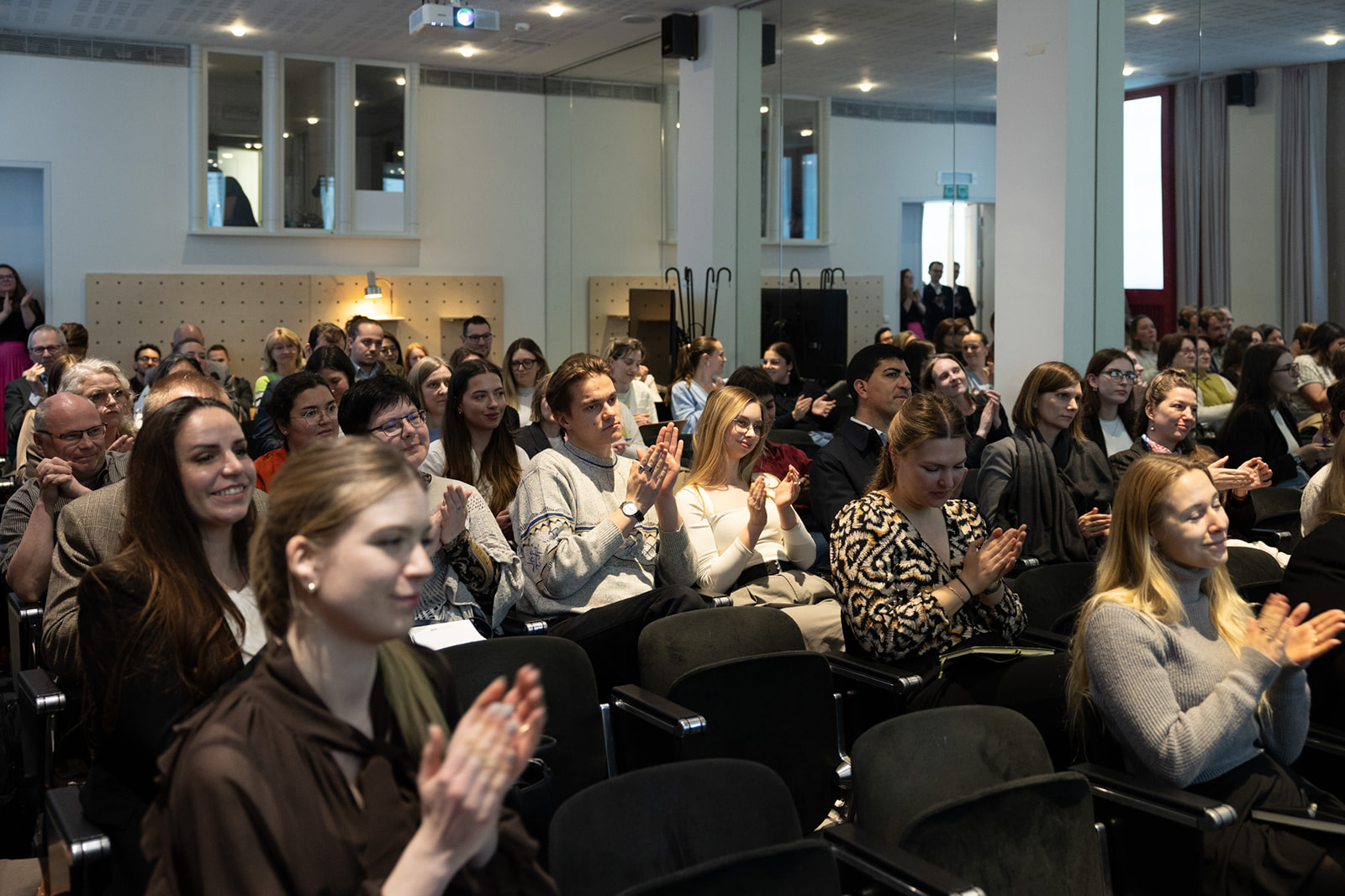
The final part of the discussion focused on what the speakers would change if they had a “magic wand.” Chiara Colella would like to see a broader and more effectively implementable strategy in which STEM would not be an isolated field but rather part of a more comprehensive framework. Mariana Tesařová would like to overcome the deeply rooted belief that STEM fields are only for the “chosen few” and promote a more inclusive approach that would allow a wider range of students to develop technological competencies. Lena Dändliker’s wish would be to anchor STEM more firmly in the education system, for example through more systematically introduced elements that would help expand the reach of existing programs.
The debate was followed by the traditional Q&A with the audience, during which the need to strengthen support for teachers, better anchor STEM competencies in education, and strike a balance between free choice of study and labour market demands was raised. After the debate, participants had the opportunity to continue informal conversations over refreshments, which were provided by the Representation of the South Moravian Region to the EU.