European University Alliances Call for More Stable Funding
The fourth Forum on European University Alliances assessed the alliances’ achievements to date and emphasised the need for simpler, long-term funding.
The forum, which brought together more than 250 participants from across Europe, was organised by the Irish Presidency of the Council of the EU on Friday, 10th of July, at Maynooth University. It was the fourth forum organised by the country holding the EU Council Presidency. During the event, participants assessed progress under the European Universities initiative and discussed its future direction. In all plenary discussions and parallel workshops, the need for a sustainable and streamlined funding, governance, and policy framework to support deep and lasting cooperation in the fields of education, research, and innovation was emphasised.
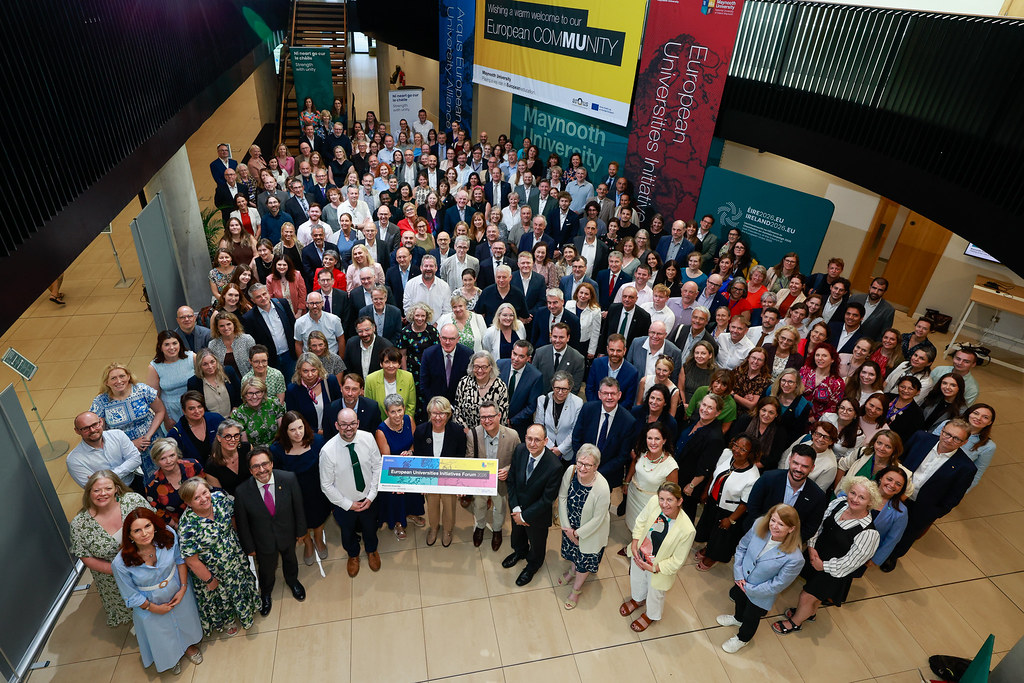
The overarching theme of the forum was the figurative removal of the scaffolding surrounding the alliances: “The time has come to permanently remove the scaffolding and strengthen the structures and supports necessary for these alliances to continue growing and become permanent institutions based on shared academic cultures and cross-border research and teaching,” said Eeva Leinonen, President of Maynooth University, at the forum’s opening.
The one-day program focused primarily on the future funding structure and investment strategies of the alliances after 2027, the future development of a European degree, the deepening of academic integration, and the role of the alliances in strengthening European competitiveness, innovation, inclusion, and democratic values. Discussions also covered student involvement in the governance of the alliances and better alignment of European, national, and institutional strategies.
Alliances at the height of their ambitions, but with uncertain funding
In her opening remarks, Rector Leinonen emphasised that current funding frameworks do not align with the alliances’ ambitions for the transformation of higher education in Europe, and the fundamental question remains: what will happen once funding from the European Commission ends? Leinonen listed three key factors for the long-term success of the alliances:
- a long-term commitment to institutional collaboration that is not dependent on short-term funding
- simplification of legal and administrative frameworks
- a broader understanding of the alliances’ current role and the shift from a predominantly teaching-focused initiative to expanded collaboration, including research and global partnerships
Colm O’Reardon, Secretary General of the Department of Further and Higher Education, Research, Innovation, and Science, emphasised the role of alliances in Europe’s competitiveness and in addressing the challenges of today’s world. He noted that the current priorities of the Irish Presidency are competitiveness, security, and values, which are key for both universities and alliances.
Roxana Mînzatu, Vice-President of the European Commission, also addressed the forum via a video message: “European University Alliances are not just another EU programme; they are part of Europe’s infrastructure. They connect people and enable the free flow of knowledge. Europe needs Europeans who think critically and are able to cross borders. Of course, financial resources are important; this is a crucial moment in the negotiations on the next EU budget - I will continue to fight for strong support for education and vocational training.”
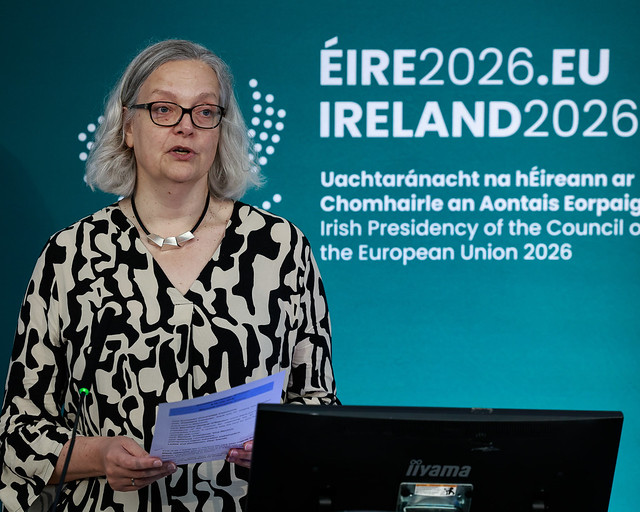
Susanne Conze from the Directorate-General for Education, Youth, Sport, and Culture (DG EAC), Head of the Transnational Cooperation in Higher Education Unit, also spoke on behalf of the European Commission. She emphasized the need to make the fifth freedom a reality, as well as the importance of the European Education Area and the European Higher Education Area. “As for the Joint European Degree Label, alliances are key to validating this initiative. The first two labels will be issued as early as next week; this label will allow us to see how the idea of a Joint European Degree works,” she said. She was followed by Maria Cristina Russo, Deputy Director-General at the Directorate-General for Research and Innovation (DG RTD), who emphasised the need to link education, innovation, and research through alliances and their importance for the EU’s competitiveness, particularly in the areas of talent and innovation.
How can we ensure that alliances remain successful in the future?
Throughout all the subsequent panel discussions and smaller group debates, the need to ensure sustainable yet streamlined funding for alliances was repeatedly raised. A representative of FOREU4ALL, a community bringing together all 73 alliances, highlighted the current administrative burden the alliances are facing. As an example, he cited the Arqus alliance, which has received funding under both Erasmus+ and Horizon Europe, and calculated that over the nine-year funding period (from 2019 to 2028), the alliance’s coordinators will spend a full two years preparing interim and final reports, handling administrative tasks, and drafting new grant applications. Alliance representatives are therefore calling on the European Commission and member states to meet the alliances’ expectations for more stable and long-term funding, for example, for a full seven years, in the new programming period. They are also calling for a unified support system that would link funding from the Erasmus+, Horizon Europe, and future European Competitiveness Fund programmes. However, the current legislative proposals for these programmes contain no provisions to this effect. It is therefore unlikely that these changes will occur in the next programming period.
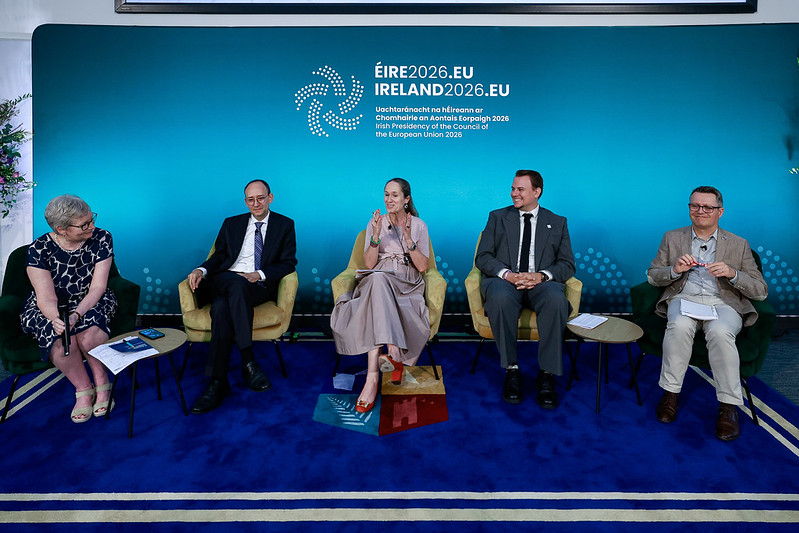
During the discussions, it was also noted that funding alliances primarily through the Erasmus+ programme limits the scope of activities that the alliances can carry out. Criticism was also directed at the European Commission, its tendency to operate in isolation, and the increasing demands that alliances meet ever-new political goals and address areas that did not exist when the alliances were founded.
If you’re interested in the discussions from the plenary session of the forum, watch the recording. The next forum on European University Alliances is scheduled to take place on 17th of March 2027, during the Lithuanian Presidency of the Council of the EU.